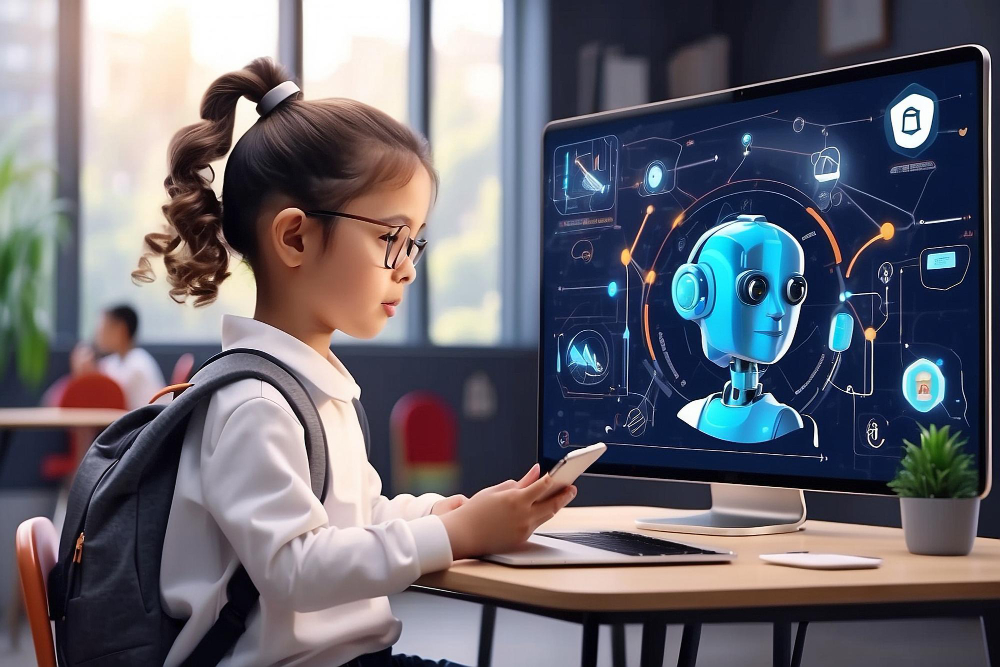
In today’s digital-first world, education is undergoing a revolution. Artificial Intelligence (AI) is no longer just a futuristic idea; it’s becoming an essential part of modern learning. From personalized lessons to intelligent tutoring systems, AI is transforming how students learn, teams teach, and institutions operate.
One of the most significant advantages of AI in education is personalization. Every student learns differently, and AI helps tailor the learning experience to individual needs. Adaptive learning platforms use algorithms to track progress and recommend customized lessons. This means a student who struggles with math can receive extra practice problems, while one who excels can move ahead without waiting.
AI also helps educators save time through automation. Tasks like grading assignments, managing attendance, and even answering routine student questions can be automated using chatbots and machine learning systems. This allows teams to focus more on creativity, mentorship, and developing critical thinking skills among students.
Another exciting innovation is AI-powered analytics. These systems analyze student performance data to identify patterns and predict outcomes. Schools and institutions can use this information to intervene early, helping students before they fall behind.
AI is also making education more accessible. Voice recognition tools and language translation features help break barriers for students with disabilities or those learning in non-native languages. In remote or underserved areas, AI-driven online platforms can offer quality education to learners who might otherwise miss out.
However, while AI brings enormous potential, it also poses challenges. Issues like data privacy, algorithmic bias, and the need for digital literacy must be addressed. Teams must be trained to use AI responsibly and ethically, ensuring technology complements, not replaces, human connection in education.
The future of learning will be a partnership between humans and technology. AI will handle repetitive tasks and deliver personalized insights, while educators nurture creativity, emotional intelligence, and social skills — the things machines can’t replicate.
Education has always been about empowering minds. With AI, that empowerment is entering a new era — one where learning is not limited by geography, time, or one-size-fits-all methods. The future classroom is not just smarter; it’s more human than ever.





Ripon
July 30, 2025consectetur adipisc ing elits dictum quam augue ac laor eet liglero comiodo conseqatcoe ctetur adipisc ing elit, sed do eiusmod
Ripon
July 30, 2025consectetur adipisc ing elits dictum quam augue laoret liglero comiodo conseqatcoe ctetur adipisc ing elit, sed do
Ripon
July 30, 2025consectetur adipisc ing elits dictum quam augue ac laor eet liglero comiodo conseqatcoe ctetur adipisc ing elit, sed do eiusmod ho